


cczz | Exploring the Intricacies of Strategy Games: A Deep Dive
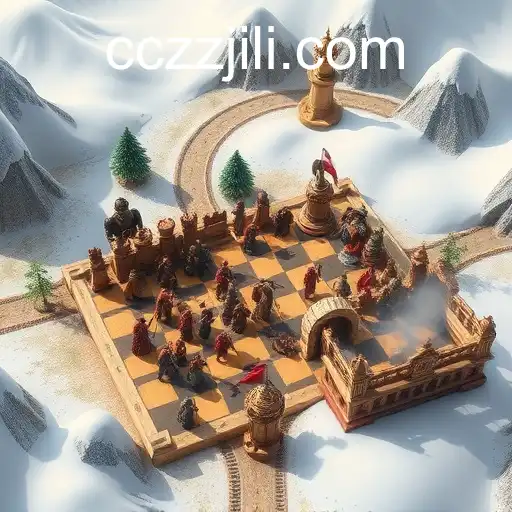
The realm of strategy games has long been a cornerstone in the expansive world of gaming, providing players with complex, thought-provoking challenges that require careful planning, tactical decision-making, and strategic foresight. Characterized by gameplay that emphasizes skillful thinking and planning to achieve victory, these games often simulate real-world scenarios or fantastical environments that demand rigorous mental engagement from the player.
Strategy games can be broadly categorized into two main types: real-time strategy (RTS) and turn-based strategy (TBS). Each type offers its own unique set of challenges, requiring different skill sets and strategic approaches. In real-time strategy games such as 'StarCraft' or 'Age of Empires', players must think quickly and execute decisions in real-time, balancing resource management, unit production, and combat operations. Conversely, turn-based strategy games like 'Civilization' and 'XCOM' allow players to take a more measured approach, analyzing the situation and considering various tactical possibilities before committing to their chosen course of action.
One of the defining aspects of strategy games is their ability to simulate the complexities of decision-making. Players are often tasked with managing limited resources, navigating diplomatic considerations, and preparing for unexpected obstacles, mirroring the kinds of strategic challenges faced by leaders throughout history. Moreover, these games frequently emphasize the importance of adapting to dynamic environments, teaching players the value of flexibility and creative problem-solving.
Exploring the history of strategy games reveals a lineage that stretches back decades, from the chess-like boards of early titles to the deeply immersive experiences available today. The strategy genre has witnessed an evolution driven by technological advancements, resulting in stunning graphics, intricate storylines, and more sophisticated AI systems.
For newcomers drawn by the keyword 'cczz' in strategy games, the sheer variety can seem daunting. However, the genre's accessibility has increased in recent years with the development of user-friendly titles that serve as excellent entry points for beginners. Games such as 'Into the Breach' and 'Fire Emblem' offer straightforward mechanics while still challenging players to employ thoughtful strategies.
In the broader context of online gaming communities, strategy games hold a unique position. They foster environments where competition and collaboration coexist, often encouraging players to modify or create their own unique scenarios and challenges. This communal aspect not only extends the life of individual games but also cultivates a culture of sharing insights, tactics, and innovations.
As technology continues to advance, the future of strategy games looks bright, with the promise of even more immersive experiences and complex gameplay systems. Whether through exploring new worlds, engaging in historical reenactments, or building empires from the ground up, strategy games will undoubtedly maintain their appeal to gamers seeking intellectual stimulation and challenging gameplay.
